Commercial Roof Leak Repair in Manchester, NH | Commercial Roofers of New Hampshire
Commercial Roof Leak Repair in Manchester, NH | Commercial Roofers of New Hampshire , New Hampshire commercial roofing.

The UPS distribution hub on Brown Avenue in Manchester, New Hampshire anchors the Granite State's logistics infrastructure and exemplifies the roofing challenges that face large warehouse and distribution buildings throughout southern New Hampshire. Manchester's climate sits at the intersection of New England's brutal winters and its increasingly intense summer convective storms, a combination that demands roofing systems designed for snow loads that can exceed forty pounds per square foot, ice dam formation at eave edges, and the freeze-thaw cycling that can complete fifty or more cycles per winter in a year with variable temperatures.
Drainage on a large Manchester warehouse roof is governed by both rainfall intensity and snowmelt rates. New Hampshire's commercial building code requires that roof drainage be designed for the 100-year, one-hour rainfall event, which in Manchester runs approximately five inches per hour. But the more operationally dangerous drainage event is a rapid spring thaw following a heavy snowpack, when fifty thousand square feet of accumulated snow can melt into standing water faster than undersized interior drains can remove it. All drain bodies should be protected with dome strainers, and electric heat cables should run in the drain bowl and the first six feet of conductor pipe, activated by a thermostat at thirty-four degrees Fahrenheit. Overflow scuppers through the parapet are required by code and serve as the last line of defense against structural overload.
EPDM fully adhered systems are the dominant membrane choice for Manchester warehouses because of their proven cold-weather flexibility and long track record in New England's freeze-thaw climate. A sixty-mil fully adhered EPDM with factory-seamed lap splices eliminates field seam adhesive concerns in cold weather, where contact adhesives fail to achieve adequate bonding below forty degrees Fahrenheit. The alternative is a self-adhering EPDM system, which performs well in Manchester's climate if the primer and self-adhering laps are installed above fifty degrees Fahrenheit. TPO heat-welded systems are increasingly specified on new Manchester warehouses because the weld quality is less temperature-dependent than adhesive-based systems, provided the contractor has a heated tent system for cold-weather work.
Dock penetrations at Manchester's logistics facilities require flashing details that account for the differential movement created by freeze-thaw cycling. Dock canopy attachment bolts that penetrate the roof deck or parapet cap move seasonally as the canopy steel expands and contracts, and any flashing that is rigidly bonded to both the canopy attachment and the membrane will tear over several freeze-thaw cycles. The solution is a flexible EPDM sleeve that is bonded to the membrane but connected to the canopy attachment with a compression fitting that allows vertical movement. All sealants at dock penetrations should be rated to minus-fifty Fahrenheit and should be inspected annually in late fall before the freeze cycle begins.
Forklift exhaust stacks at Manchester warehouses must be extended well above the finished roofing surface to prevent snow accumulation from blocking the exhaust. The standard detail calls for a twelve-inch-high curb, an eighteen-inch stack extension above the curb, and a hinged stack cap that opens under exhaust pressure and closes when the forklift is off. The stack material should be twenty-gauge stainless steel rather than galvanized, because road-salt-laden snowmelt that accumulates on Manchester warehouse roofs accelerates galvanized steel corrosion more rapidly than in inland climates. The membrane boot at the stack penetration should be a pre-formed EPDM boot with a stainless draw band sealed with silicone caulk rated for northern climates.
Snow load design governs the structural and roofing engineering for large Manchester warehouses. New Hampshire's ground snow load in the Manchester area is forty-three pounds per square foot at grade, and the roof design snow load after reductions for roof slope and thermal factor still typically runs twenty-five to thirty-five pounds per square foot on a large flat warehouse. This means that a 100,000-square-foot warehouse roof can carry 1.5 to 1.75 million pounds of snow at full design load. Any re-roofing project that adds insulation thickness must be accompanied by a structural analysis confirming that the existing deck and framing can carry the added dead load combined with the design snow load. The New Hampshire Building Code requires this analysis for any re-roofing project that adds more than one inch of insulation to the existing system.
Energy efficiency for Manchester warehouses is primarily a heating cost concern, though summer cooling loads in the warehouse are not trivial given New Hampshire's increasingly hot summers. Above-deck polyisocyanurate insulation at R-30 is the current baseline for new warehouse construction in Manchester, and re-roofing projects that bring insulation to that level can qualify for New Hampshire Electric Co-op or Eversource commercial efficiency incentives. Polyiso loses effective R-value at very low temperatures, so specifying a facer-rated cold-temperature formulation on the lower polyiso course is important for a Manchester warehouse that experiences sustained minus-ten to minus-twenty conditions during January cold snaps.
Scheduling a large warehouse re-roof in Manchester must account for New Hampshire's compressed outdoor construction season. The practical window for membrane installation is May through October, with June through September being the most reliable. October installations carry risk because early cold snaps can bring membrane-incompatible temperatures with little warning, and November re-roofing in Manchester is generally inadvisable without heated tent systems. Phasing the project to complete all tear-off and membrane work before Columbus Day weekend is the standard approach for large Manchester warehouse projects, with ancillary work like drain upgrades and parapet cap replacement able to continue into early November.
Choosing a roofing contractor for a Manchester warehouse project means verifying their familiarity with New Hampshire's snow load requirements, their access to cold-weather-rated materials, and their experience with the freeze-thaw flashing details that distinguish durable New England installations from those that begin to fail in the first winter. Request references from comparable Manchester-market projects, confirm the contractor carries the required bonding and insurance, and ensure the proposed assembly carries a manufacturer's warranty that is not voided by New Hampshire's winter temperature conditions.
Access, wet insulation, deck repair, edge metal, drains, temporary protection, after-hours work, and occupied-building staging change the number faster than the roof label. We verify those conditions around Merrimack before treating a square-foot price as reliable.
Often, but the sequence has to be planned. We review entrances, loading docks, patient or tenant areas, roof access, odor sensitivity, and weather windows near Milford before recommending daytime, phased, or after-hours work.
We look for wet insulation, deck condition, attachment, slope, seam condition, drain performance, and edge-metal risk. If the roof around Manchester AP station USW00014710 is dry and stable, preservation options stay on the table. If moisture or deck damage is spreading, replacement planning becomes more defensible.
Typical documentation includes roof-area notes, photo locations, leak or damage observations, priority levels, repair limits, access constraints, and budget categories. On storm work, we provide contractor-side roof evidence without promising insurance outcomes.
Timing depends on weather, crew load, access, and whether interior water is active. We triage emergency conditions first, especially when water is entering occupied space near airport hangars and logistics roofs, and then separate temporary dry-in from permanent scope.
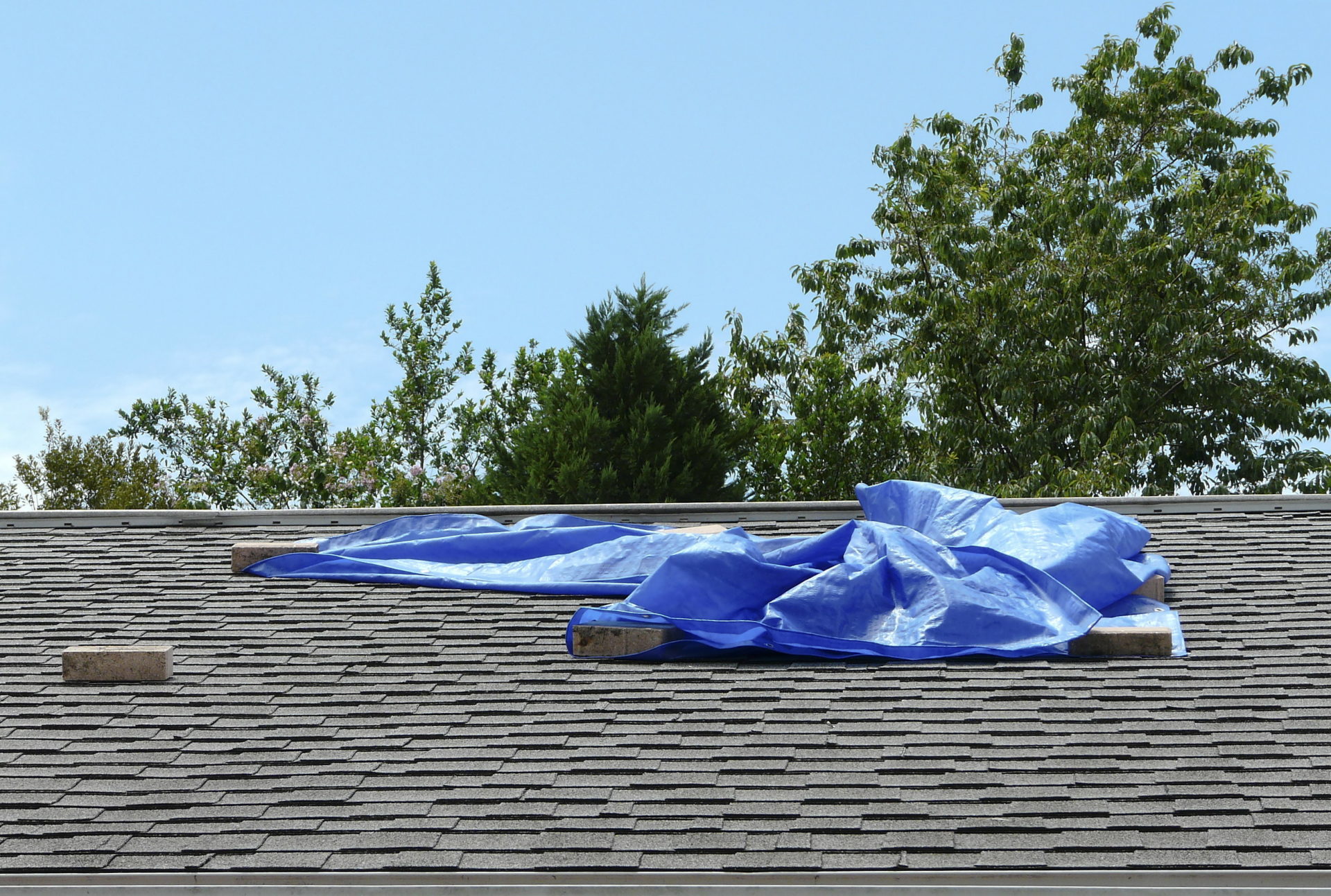
Commercial Roof Leak Repair in Manchester, NH | Commercial Roofers of New Hampshire , New Hampshire commercial roofing.

Storm Damage Roof Repair in Manchester, NH | Commercial Roofers of New Hampshire , New Hampshire commercial roofing.
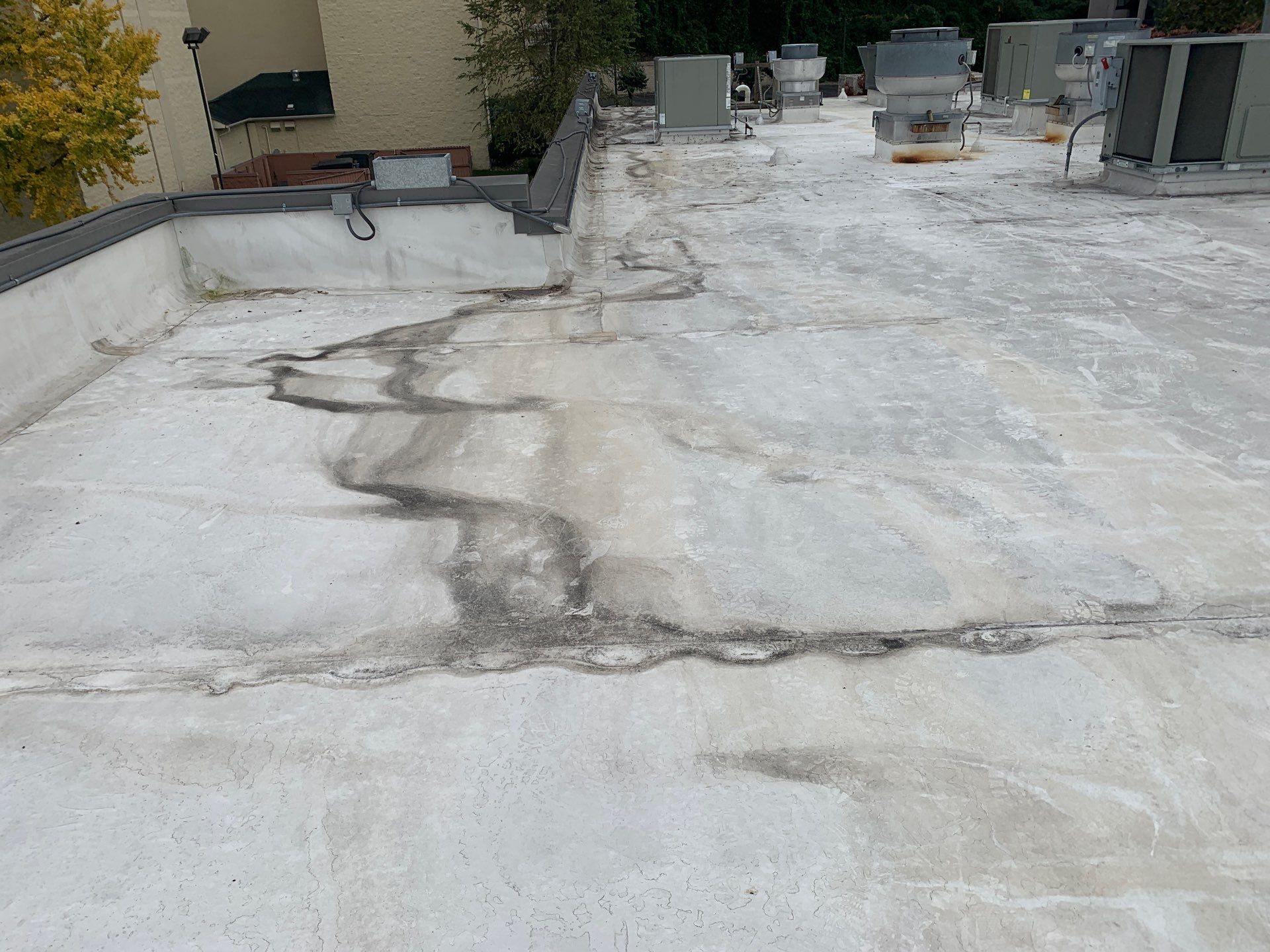
Wind Damage Roof Restoration in Manchester, NH | Commercial Roofers of New Hampshire , New Hampshire commercial roofing.
Send the building location, roof age, leak location, tenant constraints, and access notes. We will point the request toward inspection, repair scope, maintenance, replacement budgeting, or bid comparison.
Contact Us