Commercial Roof Leak Repair in Manchester, NH | Commercial Roofers of New Hampshire
Commercial Roof Leak Repair in Manchester, NH | Commercial Roofers of New Hampshire , New Hampshire commercial roofing.

New Hampshire's industrial market is defined by its geography: a relatively small state with a dense southern tier that functions as an extension of the greater Boston logistics and manufacturing economy, and a northern region dominated by paper and forest products, hospitality, and the kind of rugged light industrial that services those sectors. The I-93/I-293 corridor linking Concord and Manchester is the spine of the state's industrial roofing market, and the facilities along it , logistics buildings, light manufacturing, technology assembly, pharmaceutical operations , face a New England climate that delivers 40 inches of annual rain, 65 inches of annual snowfall, and winter temperatures and freeze-thaw cycles that destroy poorly installed roofing systems with methodical efficiency.
Manchester-Boston Regional Airport has been growing as a secondary airport for the Greater Boston market, and the industrial development that's tracked that growth , cargo facilities, corporate aviation hangars, flight support buildings, and light industrial in the Manchester Airport industrial zone , creates a concentrated roofing market with access and operational constraints typical of airport-adjacent work. We coordinate with Manchester-Boston Airport Authority for crane operations and aerial work in the approach and departure corridors, and we're familiar with the NOTAM process and the construction safety requirements that apply to contractor work near active runways. For building owners and managers in the airport industrial zone, working with a contractor who's already navigated those coordination processes is a meaningful advantage over bringing in a contractor who's learning them on your project.
Nashua's position at the Massachusetts state line makes it effectively part of the Route 3 corridor technology and logistics market, and the industrial buildings in Nashua and the surrounding communities , Merrimack, Bedford, Hudson , are among the most actively maintained industrial real estate in New Hampshire. These are facilities managed by sophisticated property management organizations with capital planning disciplines that require documented condition assessments, written RUL (Remaining Useful Life) estimates, and system specifications with full material data sheet packages. We deliver that documentation as standard practice, not a special request. Industrial property managers in southern New Hampshire expect it, and any contractor who can't provide it shouldn't be bidding on facilities in this market.
The Portsmouth Naval Shipyard at Kittery, just across the Piscataqua River from Portsmouth, drives an industrial ecosystem in the Seacoast region that includes defense contractors, precision manufacturing, and maritime industrial operations in Portsmouth and surrounding communities. BAE Systems and the defense technology industrial base in the Portsmouth area have security clearance requirements for contractor access that we've navigated in this market. The combination of tidal salt air from the Piscataqua and Great Bay estuaries with New Hampshire winter conditions creates an accelerated corrosion environment for metal roofing components , we specify marine-grade corrosion protection on edge metal, fasteners, and pipe flashings for all Seacoast region industrial work.
New Hampshire's freeze-thaw cycle is among the most aggressive in the eastern United States. The Granite State nickname is earned , the freeze-thaw cycle that cracks granite outcroppings over geological time works on building materials at a much faster pace. For industrial roofing, this means that any membrane detail with standing water exposure during freeze-thaw cycles , poorly drained corners, drain perimeters, low-slope transitions , will be mechanically worked at every freeze event. We design around freeze-thaw in two ways: first, by ensuring positive drainage eliminates standing water from every roof surface area; second, by selecting membrane systems and seam details that maintain flexibility at New Hampshire winter temperatures rather than becoming brittle and susceptible to crack propagation under ice formation stress.
Snow load management in New Hampshire industrial is a life-safety issue, not just a maintenance consideration. The state's 65-inch average annual snowfall delivers roof loads that must be designed for, not just hoped against. For older industrial buildings on the I-93 corridor that were built before modern snow load standards, we assess structural capacity as part of every reroof project. The roofing contractor's role isn't to engineer the structure, but it is to flag conditions where a new roofing system adds dead load to a building that may already be at or near its design capacity, and to document the building's condition so the property owner can make an informed decision about whether a structural engineer review is warranted. We've found buildings in the Manchester and Concord industrial parks where the accumulated dead load of multiple overlay roof systems had pushed the structure into a range that a significant snow event could challenge.
Concord-area state government facilities and the healthcare and technology industrial adjacent to them are a specific segment of the New Hampshire market where documentation, compliance, and permitting thoroughness is not optional. We pull every permit on every project in New Hampshire , the state's building code administration is consistent, permit records are public, and a building without permit history for its roof system is a problem that gets discovered at the worst possible time, usually during a sale or refinancing. Roofing work in New Hampshire without permits isn't a gray area legally or practically, and we've walked away from projects where the owner was asking us to work without the required permits.
The Liberty Mutual insurance operations buildings and the legacy Segway manufacturing facility in the Manchester area are part of a technology-industrial building stock that is transitioning from its original uses into a mix of light manufacturing, tech assembly, and office-industrial hybrid uses. These buildings have roofing systems from various eras that reflect their construction and renovation history , some have been well maintained, some haven't. For buildings transitioning from single-tenant to multi-tenant occupancy, the roofing system's condition becomes relevant to lease negotiations and due diligence processes. We provide condition assessments specifically for commercial real estate transactions and tenant improvement projects, with documentation formatted for the due diligence review rather than just a work order narrative.
We serve industrial building owners and managers across the full New Hampshire market, from the Nashua-Manchester-Concord I-93 spine to the Seacoast defense and maritime industrial, and north through the Laconia and Concord industrial areas. New Hampshire is a demanding roofing environment , the climate doesn't forgive poor installation or deferred maintenance, and the building owners who manage their roofs proactively come out ahead of those who treat the roof as an afterthought until it fails. We're ready to start with a condition assessment, give you a straight answer about what your building needs, and put together a plan that fits your capital timeline.
For flat and low-slope industrial roofs in New Hampshire, fully adhered 60-mil EPDM is our primary recommendation because of its proven cold-climate flexibility and seam integrity performance across extreme temperature ranges. EPDM remains flexible at temperatures well below the minus-20-degree-Fahrenheit events that New Hampshire can experience, while stiffer membrane types like standard TPO can become brittle at those temperatures and are susceptible to impact cracking from ice formation. The fully adhered application eliminates the gap between membrane and deck that allows wind-driven ice crystals to infiltrate in mechanically fastened systems. For new construction where cool roof energy performance is a priority, white TPO with cold-weather seaming protocols is a viable choice, provided the installation occurs above 40 degrees Fahrenheit and the contractor uses the supplemental heat protocols required below that threshold.
Ice dams on industrial buildings form when heat escaping through inadequately insulated roof areas melts snow, which then refreezes at the colder eaves and parapet perimeters, creating a dam that backs up meltwater under the membrane edge. Prevention requires adequate roof insulation to keep the deck temperature below freezing during snow events , current energy code requirements in New Hampshire mandate R-values that, if properly installed, should prevent significant ice dam formation on new construction. On existing buildings with ice dam history, the corrective action is typically adding insulation above the deck surface on the next reroof project. Heat trace on gutters and downspouts is a secondary intervention that helps with drainage once ice dam conditions form but doesn't address the root cause. For industrial buildings with persistent ice dam damage, a building envelope professional's assessment of the insulation assembly is warranted alongside the roofing contractor's work.
A commercial real estate due diligence process for an industrial building in Nashua will typically request a current roof condition report (within 12 months), permit history for the current roof system installation, any applicable manufacturer's warranty documentation and its transferability to a new owner, documentation of maintenance inspections performed during the warranty period (as required to maintain warranty coverage), and any prior water infiltration incident reports. If a roof core report, infrared scan, or structural loading assessment has been performed, those are valuable addenda. We provide condition assessments specifically formatted for transaction due diligence, including an RUL estimate and capital reserve recommendation for the next replacement cycle, which buyers and their lenders want to see in a standardized format. A well-documented roof shortens the due diligence period and reduces the risk of roofing-related purchase price adjustments.
Work at defense contractor facilities in the Portsmouth and Seacoast area requires advance coordination with facility security for worker background checks and access badge issuance, which can take two to four weeks. Personnel with prior convictions or certain citizenship statuses may require additional vetting that extends the timeline. Once on site, contractor workers typically operate under an escort protocol in restricted areas. For active military installation work , Naval Station work at Pease Tradeport, for example , DBIDS (Defense Biometric Identification Data System) enrollment is required for each worker and must be completed before the project mobilizes. We factor security access lead time into project scheduling for all Seacoast defense-adjacent industrial work. Attempting to accelerate around the security process isn't possible, and contractors who promise fast-track starts on defense facility projects without accounting for this timeline are giving you inaccurate scheduling information.
New Hampshire ground snow loads vary by location , Manchester is in a lower load zone than northern or elevated areas of the state , and the design roof snow load is determined by the structural engineer at time of original construction. The safest starting point is locating the original structural drawings and identifying the design roof snow load, which is expressed in pounds per square foot. For most industrial buildings in the I-93 corridor, design roof snow loads are in the 40 to 60 pounds per square foot range. A monitoring trigger of 80 percent of design load , measured at multiple points on the roof with a calibrated snow depth gauge converted to load using fresh versus packed snow density , is a reasonable rule. We recommend that building owners have their structural engineer confirm the design load and recommend specific monitoring thresholds rather than relying on generic guidance, particularly for buildings over 30 years old where structural modification history may be incomplete.
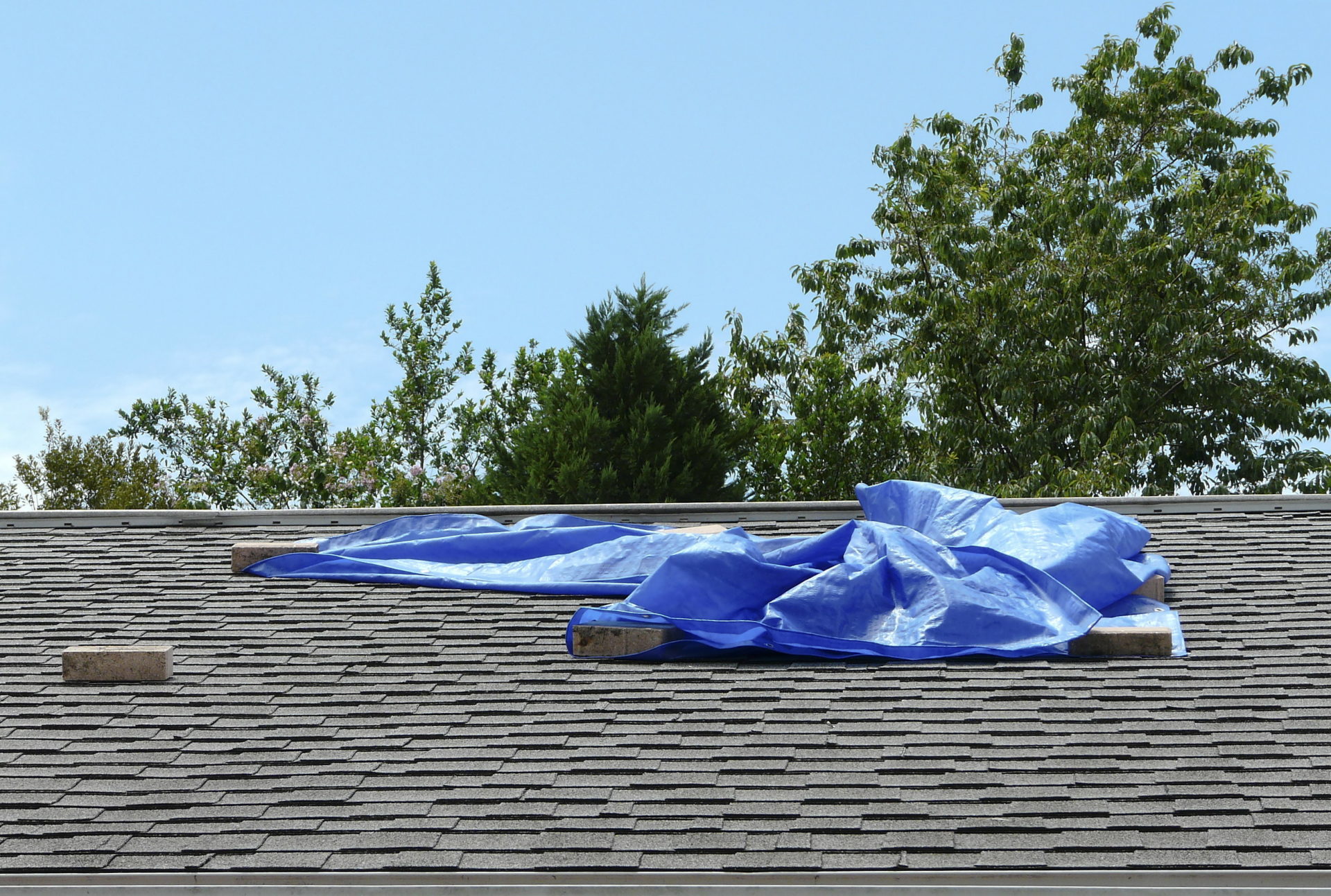
Commercial Roof Leak Repair in Manchester, NH | Commercial Roofers of New Hampshire , New Hampshire commercial roofing.
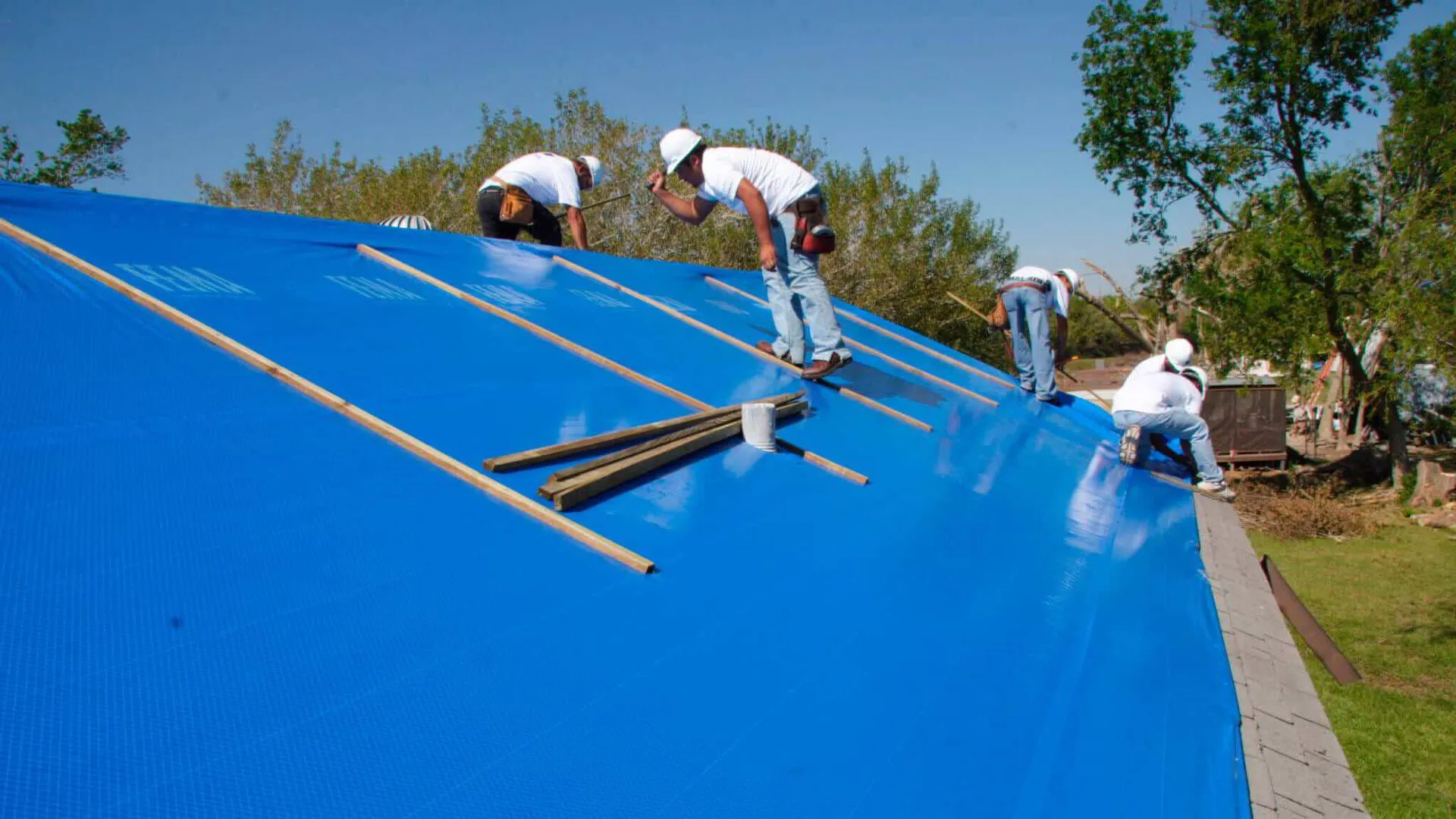
Storm Damage Roof Repair in Manchester, NH | Commercial Roofers of New Hampshire , New Hampshire commercial roofing.
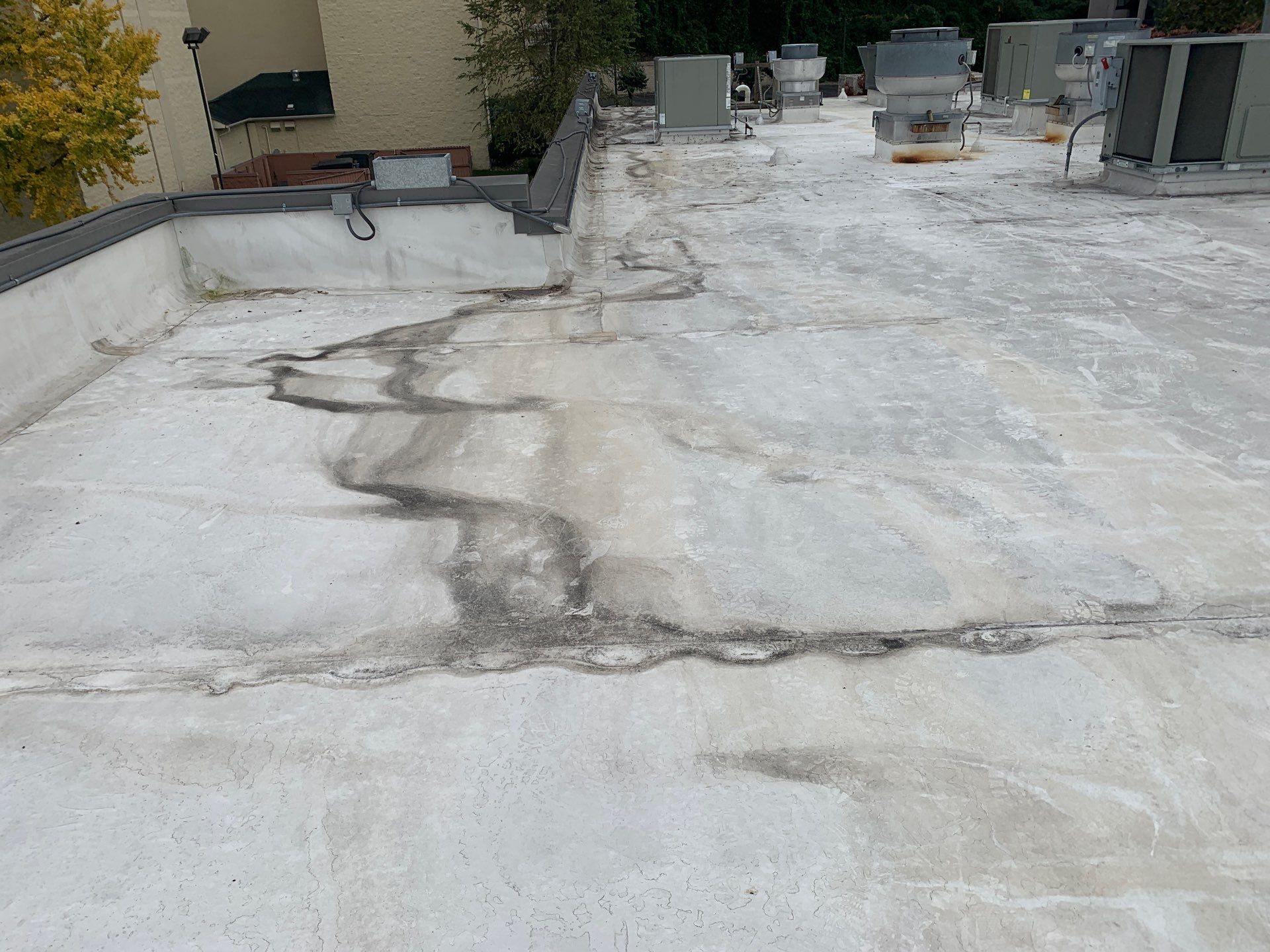
Wind Damage Roof Restoration in Manchester, NH | Commercial Roofers of New Hampshire , New Hampshire commercial roofing.
Send the building location, roof age, leak location, tenant constraints, and access notes. We will point the request toward inspection, repair scope, maintenance, replacement budgeting, or bid comparison.
Contact Us