Warehouse Roofing in Manchester, NH
Warehouse Roofing in Manchester, NH , New Hampshire commercial roofing.

Automotive plants operate at a scale most commercial roofing never touches, and they run on a clock where every hour of lost production carries a number the plant's engineering team can quote you to the dollar. That single fact drives how we approach automotive manufacturing roofing in Manchester. The region's metalworking, stamping, casting, and powertrain operations sit along the heavy-industrial spine of the city , the Gold Street corridor, the rail-served sites off Second Street, and the larger parcels with quick I-293 and Route 3 access that feed just-in-time supplier networks. These are big roofs over busy floors, and the roofing plan has to respect the production schedule above everything else.
A facility with several hundred thousand to a few million square feet of roof under one envelope cannot be reroofed the way you do a strip center. It has to be sectioned into zones, sequenced so material delivery, tear-off, and crane staging stay within the building's real constraints, and phased so the line keeps running in adjacent bays while the active zone is worked. We treat the logistics as the project, because on a plant this size the logistics are exactly what separate a clean reroof from a production-stopping mistake.
Before anything is torn off, we sit down with plant facilities engineering and document the production shift schedule, identify which roof zones sit over active lines, and lay out a zone-by-zone phasing plan that keeps the work clear of running production. Daily dry-in is confirmed before every shift change, and we hold a direct line to the maintenance foreman for the duration so a change on the floor and a change on the roof never collide. The governing rule is simple: the roof gets sequenced to fit the plant, and watertight integrity is verified zone by zone before the crew leaves it.
The paint shop is the part of an assembly plant where roofing gets most constrained, and for good reason. Paint operations release solvent vapor and carry strict fire-suppression requirements, which means hot work , torching, grinding, welding , is tightly controlled on any roof zone over or near them. We build the hot-work permit plan in preconstruction with the plant's EHS team and specify cold-applied adhesive or mechanical attachment for membrane over paint-adjacent zones where torch exclusions apply. Solvent-based adhesives are off the table above active paint operations. None of this is a surprise on a well-planned project; it is standard scope, written into the plan before the first roll goes up.
Stamping, casting, welding, and engine work throw enormous process heat and fume into the building, and the roof carries the ridge ventilators, makeup-air units, exhaust fans, and process stacks that move it all. Those penetrations are dense, they run hot, and several of them carry oily or particulate-laden exhaust that drifts back onto the membrane. We inventory every curb, ridge vent, duct penetration, and stack, flash each one for the temperature and exhaust it actually sees, and address the oil-fume drift zones around casting and machining exhaust with compatible membrane and protection rather than letting a standard detail degrade under it.
Heavy stamping presses and large machining equipment put vibration into the structure that travels up to the roof, and that changes how seams and flashings have to be built. A standard single-ply seam is fine over an office or a warehouse, but sustained press vibration at the frequencies a big stamping line generates can fatigue an improperly welded or adhesive-bonded seam over time. We account for that exposure in the membrane specification and the welding procedure for press-adjacent zones , tighter welds, verified seam strength, and details that tolerate movement , so the seams over your heaviest equipment are not the first thing to fail.
OEM and supplier facilities close out roofing projects against corporate facility-management standards, and we deliver to that bar. The package typically includes contractor safety qualification, a site-specific safety plan, the OSHA log summary, manufacturer warranty registration, a roof-zone diagram with a full penetration inventory, daily work reports, permit records, and a photographed condition survey , formatted the way each plant's engineering department requires it. Tier 1 and Tier 2 suppliers get the same discipline as the OEM plants, because a just-in-time supplier has the same zero tolerance for an interruption.
We section the roof into zones, build the phasing plan around your documented shift schedule, and keep the work clear of active production by sequencing one zone at a time. Daily dry-in is confirmed before every shift change, and we stay in direct contact with your maintenance foreman so floor and roof activity never conflict.
With a hot-work plan approved by your EHS team in preconstruction. Over paint-adjacent zones with torch exclusions we specify cold-applied adhesive or mechanical attachment and keep solvent-based adhesives off those areas entirely. The restrictions are written into the scope, not discovered on the deck.
It does. Sustained vibration from heavy stamping can fatigue an improperly built seam over time. In press- and machining-adjacent zones we adjust the membrane spec and welding procedure , tighter, verified welds and details that tolerate movement , so the seams over your heaviest equipment hold up.
Most often a 60- or 80-mil TPO mechanically attached, with fully adhered systems in paint-shop zones where fastener patterns conflict with hot-work rules. We add tapered insulation where drainage is deficient and confirm the existing deck capacity before setting insulation thickness on big spans.
Yes. Suppliers carry the same just-in-time pressure as the OEM plants, so we work them the same way , document the production schedule, sequence the roof around it, and keep a daily line open to the facilities contact.
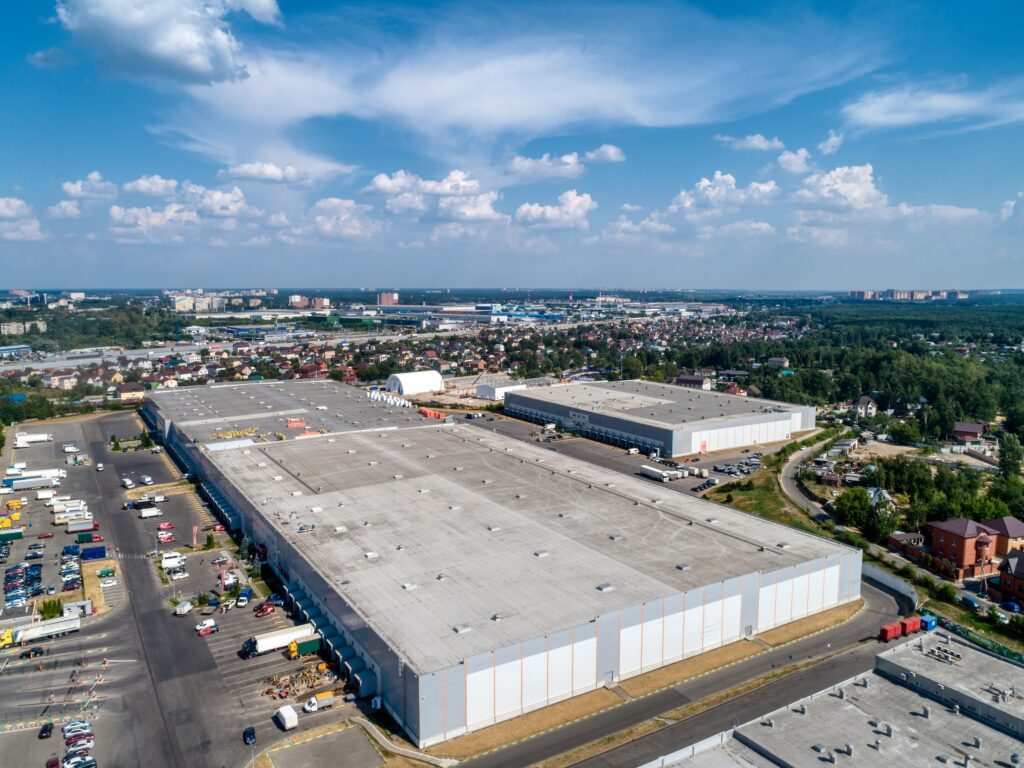
Warehouse Roofing in Manchester, NH , New Hampshire commercial roofing.
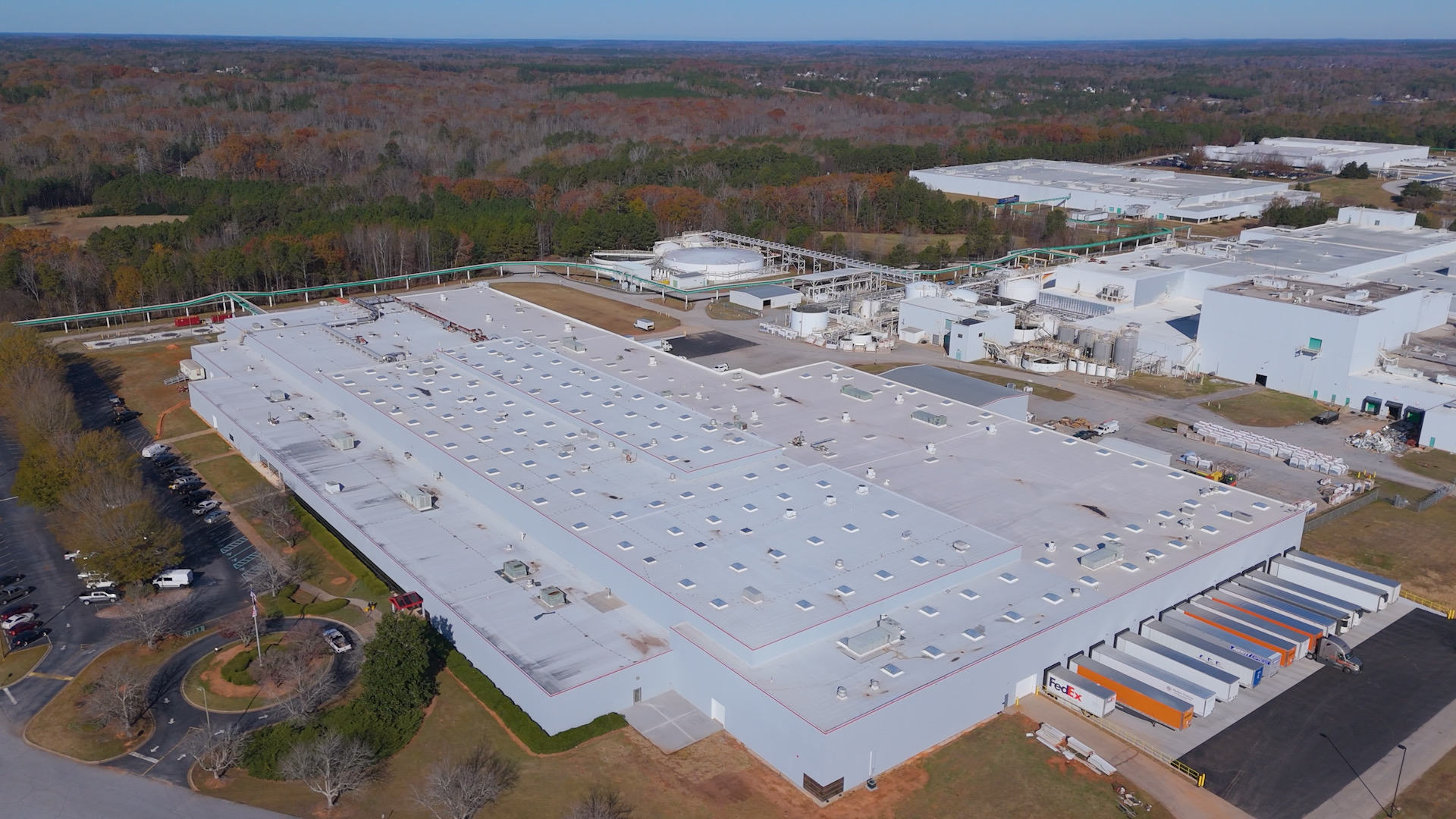
Distribution Center Roofing in Manchester, NH , New Hampshire commercial roofing.
Send the building location, roof age, leak location, tenant constraints, and access notes. We will point the request toward inspection, repair scope, maintenance, replacement budgeting, or bid comparison.
Contact Us